
Composition is how you arrange elements in a frame. It is free, works with any camera, and makes more difference than most gear upgrades.
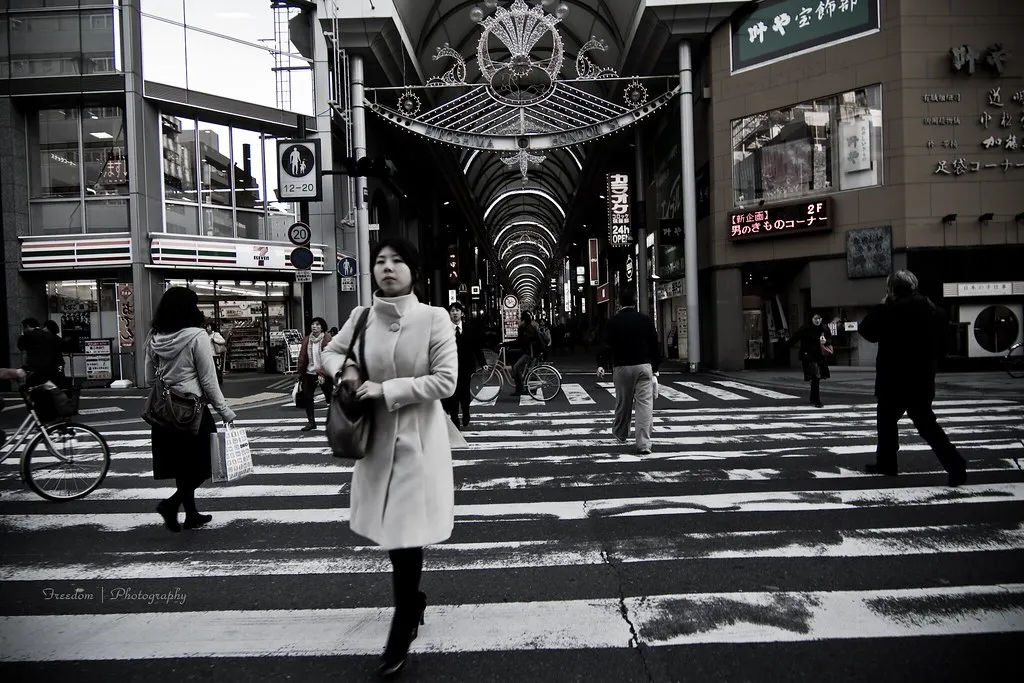
Rule of thirds
Imagine a tic-tac-toe grid over your frame. Place subjects or horizons along the lines or at intersections instead of dead center. Most cameras and phones can display a grid.
Leading lines
Roads, fences, rivers, and paths draw the eye into the photo toward your subject.
Framing
Use doorways, windows, branches, or arches to frame a subject and add depth.
Simplify the background
Clutter distracts. Move yourself or your subject to get a clean background, or use a wide aperture to blur it.
Fill the frame
Get closer. Many photos improve by removing empty space around the subject.
Change your angle
- Get down to kids’ and pets’ eye level.
- Shoot from above for food and flat lays.
- Try low angles for drama.
Symmetry and patterns
Reflections, architecture, and repeating patterns create striking images. Center composition works well here.
Negative space
Empty space around a small subject can create calm, minimal photos.
Watch the edges
Check the corners for distractions, like poles growing out of heads or cut-off limbs.
Light and timing
Golden hour, shortly after sunrise and before sunset, gives warm, soft light. Overcast days are great for portraits.
Practice exercises
- Shoot one subject 10 different ways.
- Spend a week using only one focal length.
- Look at photos you love and identify the techniques.
Rules are guides
Break them when it serves the image. Once you understand why they work, you will know when to ignore them.
See photographing kids and pets and travel photography tips.
Slow down
The simplest composition tip is to slow down. Before pressing the shutter, look around the edges of the frame, consider stepping left or right, crouch down, or move closer. Many great photos come from taking a few extra seconds to refine a shot instead of snapping the first view.
Review and learn
After a shoot, look at your favorite photos and ask why they work. Is the subject clear? Is the background clean? Is there a strong line or shape? Do the same with photos that disappoint you. Over time, you will begin composing better shots instinctively.
Composition by subject
- Portraits: focus on the nearest eye, leave a little space in the direction the person faces, and avoid cutting limbs at joints such as knees and elbows.
- Landscapes: include foreground interest such as rocks or flowers to add depth, and keep horizons level.
- Street: find an interesting background, then wait for a person to walk into the frame.
- Food: shoot from directly above for flat dishes and at a low angle for tall ones like burgers or layered cakes.
- Architecture: keep vertical lines straight by holding the camera level, or embrace dramatic angles deliberately.
Using light as a compositional tool
Light directs the eye. Bright areas draw attention, so make sure the brightest part of your frame is your subject rather than a distracting sky or window. Side light reveals texture, backlight creates glowing outlines, and soft overcast light is gentle and even. Shadows can be compositional elements too, creating shapes and leading lines.
Cropping after the fact
Cropping in editing can improve composition, but it reduces resolution. Getting it right in camera keeps the most detail. When you do crop, try common ratios such as 3:2, 4:5 for social media, or a square for a different feel.
Mistakes to avoid
- Centering everything by default. Centered subjects work for symmetry, but off-center placement often feels more dynamic.
- Tilted horizons. A slight tilt looks like a mistake. Turn on the level in your camera.
- Too much going on. If you cannot say what the photo is about in a few words, simplify.
- Ignoring the background. Busy backgrounds compete with subjects.
FAQ
Is the rule of thirds always right?
No. It is a helpful starting point, but symmetry, centered subjects, and unusual placements can be powerful when they suit the scene.
How can I practice composition daily?
Use your phone to frame scenes on your commute or walks. Composition skills transfer directly to any camera.
A simple pre-shot routine
Before you press the shutter, try a three-step routine. First, ask what the subject is. Second, check the edges and background for distractions. Third, try one alternative angle, either lower, higher, closer, or to the side. This takes only a few seconds once it becomes habit, and it is one of the fastest ways to improve your photos.
What is the “fill the frame” mistake in reverse?
Getting too close and cropping off important context, such as the top of a landmark or a person’s hands holding a gift. Step back and include what tells the story, then crop tighter later if needed.