
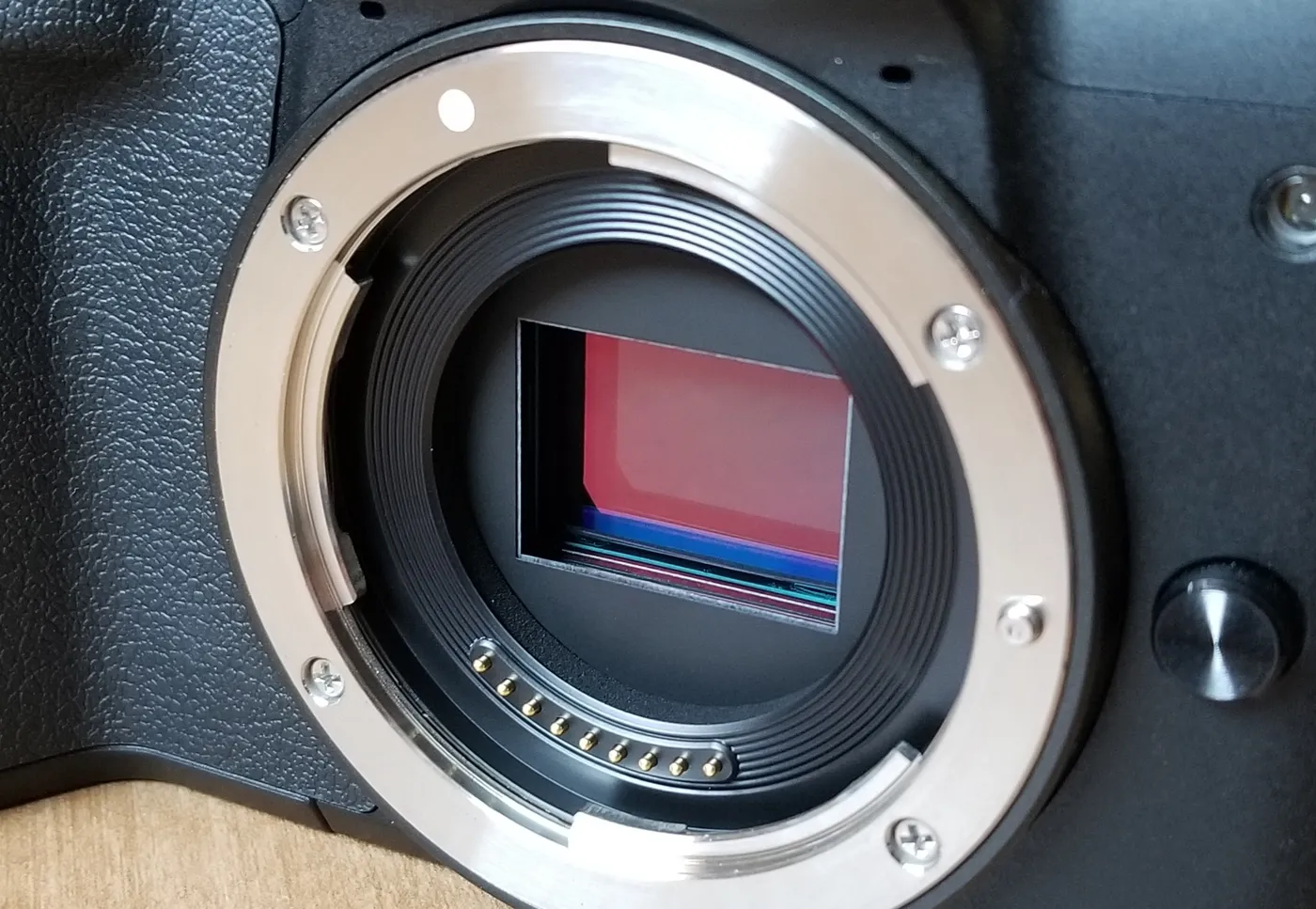
The sensor is the part of a camera that captures light. Its size affects low-light performance, background blur, and the size and price of the camera and lenses.
Common sensor sizes
From smallest to largest: - Phone sensors: tiny, though flagship phones have grown larger. - 1-inch type: used in premium compacts and gimbal cameras. Despite the name, it is not one inch across. - Micro Four Thirds: used by OM System and Panasonic Lumix G cameras. - APS-C: the most common beginner mirrorless size, used by Canon, Sony, Nikon, and Fujifilm. - Full frame: the size of a 35mm film frame. - Medium format: larger still, for specialists.
What bigger sensors do
- Collect more light overall, so images are generally cleaner at the same framing and ISO.
- Make background blur easier at the same framing and f-stop.
- Need larger lenses, which cost more and weigh more.
Crop factor
Crop factor compares a sensor to full frame. APS-C is about 1.5x (Canon 1.6x); Micro Four Thirds is 2x. Multiply the focal length to get the equivalent view: a 33mm lens on APS-C frames like about 50mm on full frame.
Megapixels are separate
Resolution is about how many pixels the sensor has, not its size. 24 megapixels is ample for most people.
Does full frame matter for beginners?
Usually not. APS-C cameras are smaller, cheaper, and excellent. Full frame shines in very low light and for maximum blur, but the lenses cost more.
Phones and computational photography
Phones combine many frames to reduce noise and extend dynamic range. In good light, they rival dedicated cameras. Bigger sensors still win for action, low light without processing artifacts, optical zoom, and true blur. See mirrorless camera vs phone.
The bottom line
Choose the sensor size that fits your budget and how much weight you will carry. A camera you bring beats a bigger sensor left at home.
Lens size and weight
One trade-off people overlook is lens size. Lenses for larger sensors need to cover a bigger image circle, which often makes them heavier and pricier, especially telephoto and fast lenses. Micro Four Thirds systems, for example, are known for small, light telephoto lenses, which appeals to hikers and travelers.
Depth of field in practice
With a smaller sensor, you get more depth of field at the same framing and f-stop. That is a downside for portraits with blurry backgrounds, but an advantage for landscapes, macro, and group photos where you want more in focus.
Sensor size comparison
| Sensor | Typical cameras | Crop factor (approx.) | Strengths |
|---|---|---|---|
| 1-inch type | Premium compacts, gimbal cameras | 2.7x | Pocketable with better quality than most phones |
| Micro Four Thirds | OM System, Panasonic Lumix G | 2x | Small lenses, great telephoto reach |
| APS-C | Canon, Sony, Nikon, Fujifilm entry and mid models | 1.5x (Canon 1.6x) | Balance of quality, size, and price |
| Full frame | Higher-end mirrorless | 1x | Low light, shallow focus |
Choosing based on what you shoot
- Travel and hiking: smaller sensors keep the kit light.
- Kids indoors and events: APS-C or full frame with a fast lens.
- Wildlife on a budget: Micro Four Thirds or APS-C, where crop factor gives more reach from smaller lenses.
- Night skies and low light: full frame has an edge.
Mistakes to avoid
- Assuming bigger always means better photos. Skill, light, and lenses matter more.
- Forgetting lens costs. Full-frame lenses often cost more.
- Comparing aperture without crop factor. An f/2.8 lens on a small sensor does not give the same background blur as f/2.8 on full frame at the same framing.
FAQ
Is a 1-inch sensor good enough?
For many travelers and casual shooters, yes. It is a meaningful step up from most phone sensors in a compact body.
What does “equivalent” focal length mean?
It describes the field of view in full-frame terms, so you can compare lenses across different sensor sizes.
How megapixels and sensor size interact
Packing more megapixels onto a sensor makes each pixel smaller. Modern sensor design has narrowed the gap, but at the same sensor size, a lower-resolution sensor can sometimes have a slight advantage in very low light, while a higher-resolution sensor gives more detail for cropping and large prints. For most people, sensor size, lens quality, and technique matter far more than the exact megapixel count.
Video considerations
Sensor size also affects video. Larger sensors give shallower focus and more cinematic background blur, but they can make keeping a moving subject in focus harder. Some cameras crop the sensor when recording certain video modes, which changes the field of view. Check spec sheets for crop factors in 4K modes if video matters to you.
Does sensor size affect battery life?
Not directly in a way most buyers notice. Battery life depends more on the camera’s processor, screen, viewfinder, and battery size than on the sensor itself.